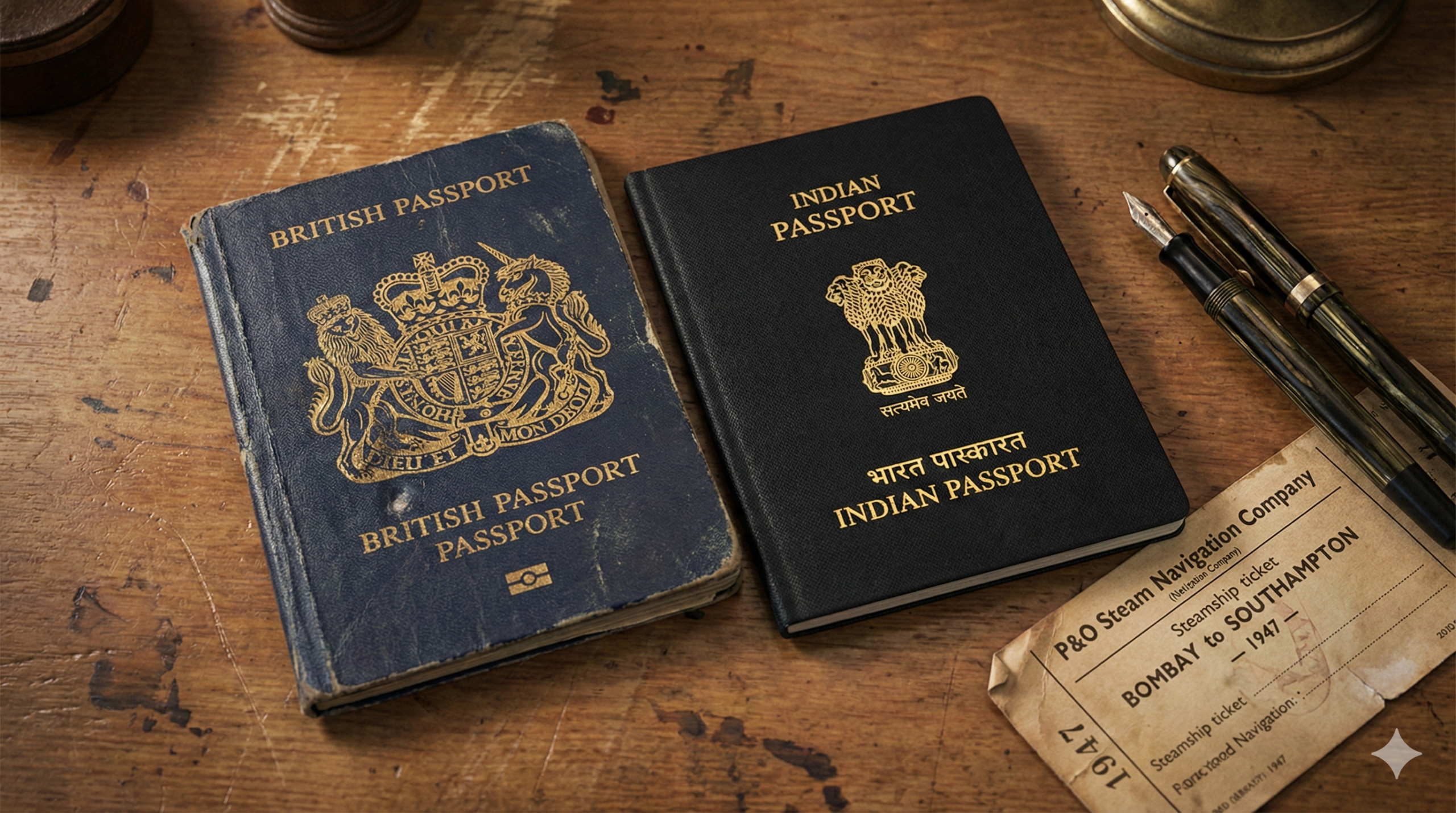
Discover the fascinating journey of the Indian passport from the “Navy Blue” of the British Empire to the “Black Passport” of 1949.
When you stand at an immigration counter today, waiting for the thud of the stamp, you are holding more than just a booklet of pages; you are holding a historical artifact. At Ekayan Consultancy, based here in Bhavnagar, we understand that a passport is the ultimate proof of identity. But the document we process for our clients today is the result of a century-long struggle for sovereignty and the right to cross borders.
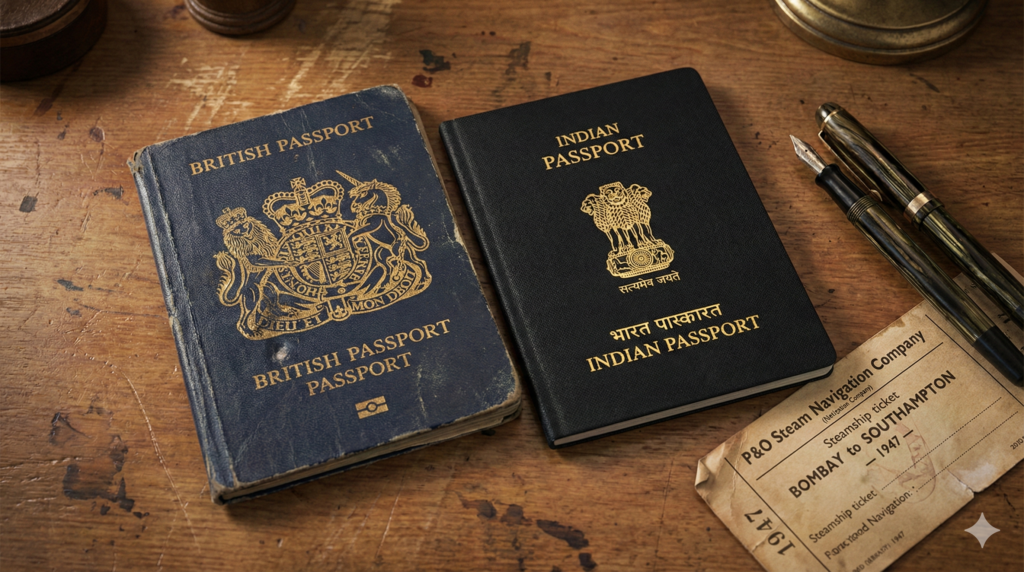
As we reflect on our nation’s history, we take a look back at the fascinating evolution of the Indian passport—from a symbol of the British Empire to the golden emblem of a rising global power.
1. The “Old Blue” and the Empire (1920–1947)
Before India was a Republic, travel was a privilege managed by the British Crown. Following the chaos of World War I, the League of Nations convened in Paris in 1920 to standardize global travel, establishing the “booklet” format we recognize today.
During this era, an Indian traveler carried a “British Indian Passport”. While it looked official in its navy blue cover, it lacked the symbols of our own identity. Instead of the Ashoka Lions, it bore the Royal Arms of the United Kingdom—the Lion and the Unicorn. Crucially, it identified the holder not as a citizen, but as a “British Subject by birth”. It was a document that allowed you to travel, but reminded you at every border that your sovereignty belonged to an “Indian Empire” ruled from London.
2. The “Black Passport”: A Forgotten Bridge (1947–1950)
Perhaps the most interesting phase in passport history occurred in the quiet years between Independence (1947) and Republic Day (1950). Recent historical analysis highlights a specific artifact from 1949 that bridged the gap between the Raj and the Republic.
In this transition period, the passport underwent a radical redesign. The navy blue was replaced by a simple black cloth-covered cardboard cover. The British Royal Arms were erased. In their place, printed in gold gilt, sat the Lion Capital of Ashoka—the four Asiatic lions standing back to back.
This change was revolutionary. While the Constituent Assembly was still debating whether the nation should be known as “India” or “Bharat,” this passport boldly printed “INDIA” above the national emblem. It was one of the first state documents to project the visual identity of a free nation to the outside world, discarding the labels of “Empire” and “Subject”.
3. The Republic and the Citizen (1950–Present)
When the Constitution came into force on January 26, 1950, the legal status of the passport holder changed fundamentally. You were no longer a subject; you were a “Citizen of India”.
This shift transformed the passport from an administrative permit into a constitutional right. Today, under the Passports Act, the document represents the Indian state’s promise to protect its citizens anywhere in the world.
4. Ekayan Consultancy: Guiding Your Journey
The journey of the Indian passport—from a handwritten paper in the 1920s to the biometrically secure e-passports of today—mirrors India’s own rise.
At Ekayan Consultancy Private Limited, we honor this history by providing diligent and expert passport and visa services. we are positioned to assist you with the complexities of modern travel, ensuring that your journey is as smooth as the history behind it is rich.
Whether you are traveling for business, education, or leisure, trust Ekayan to handle your documentation with the care it deserves.
Today, the Indian passport is evolving again. We are moving from paper to chips, from manual stamps to e-gates. But the spirit remains the same. It is the document that tells the world who you are.
At Ekayan Consultancy, we honor this history by providing you with the most diligent, expert, and seamless passport and visa consultancy services. Whether you are traveling for business, education, or leisure, we ensure that your journey—facilitated by this historic document—is smooth and hassle-free. We navigate the complexities of modern travel with the same resilience that defined the history of the document itself.

Nirav Solanki
Founder & CEO of Ekayan Consultancy and a passport documentation expert. He writes practical, experience-based articles on Indian passport rules, renewals, Tatkaal cases, and documentation to help applicants avoid errors and delays.


Comments are closed